
Six shifts shape study abroad files from Algeria for 2026: visa processing is moving online without getting faster, proof-of-funds expectations are rising, more institutions accept online English tests including the Duolingo English Test, student housing is harder to find, pathway programmes are a more common route in, and application timelines have stretched.
If you started planning your application a year or two ago and you're picking it back up now, some of what you knew has shifted. Nothing about studying abroad has gotten simpler, but a handful of trends are shaping every application cycle in similar ways, no matter which country you're aiming for. Here's what's actually moving, and what it means for you if you're applying for study abroad 2026 intakes from Algeria.
Where a government publishes a figure, this guide names it and links the page. Where it does not, it says so instead of guessing, because the worst thing you can do is plan around a rumour. What follows is a map of six durable, cross-country shifts worth building your timeline around, with pointers to where to check the current numbers yourself.
Visa processing is moving online, but "online" doesn't mean "fast"
More consulates and immigration authorities are shifting appointment booking, document uploads, and status tracking to digital portals. That's the direction almost every major destination is heading in, even if the pace differs country by country.
What this means for you: a digital process removes some of the guesswork, since you can usually see where your file sits, but it doesn't remove the bottleneck of appointment slots or processing queues. Portals fill up, especially right before intake deadlines. Digital doesn't equal instant.
- Check the official visa or immigration authority website for your target country directly, not a forum post or a Facebook group screenshot.
- Create your portal account and gather your document checklist as early as you can, even before you have every document ready. Slot availability is often the real constraint, not paperwork.
- Screenshot or save your application reference numbers and confirmation emails. Digital systems can go down for maintenance right when you need them.
Proof-of-funds expectations are trending upward
Across several popular study destinations, the amount of money you need to show to prove you can support yourself has been trending upward, alongside cost-of-living increases. Canada is the clearest case to check yourself: IRCC's living-cost requirement for a single applicant outside Quebec went up for applications submitted on or after 1 September 2026, and it is revised annually. Every destination sets its own amount, and it varies by city and by whether you're self-funding or sponsored, so read your own destination's page rather than borrowing Canada's number.
What this means for you: budget more conservatively than last cycle, and get the exact current figure from the embassy or consulate website before you start collecting bank statements. Don't rely on a number a friend used two years ago.
- Start proof-of-funds paperwork earlier than you think you need to. Bank letters, sponsorship declarations, and fund-seasoning requirements (money held in the account for a set period) all take time to assemble correctly.
- If a family member is sponsoring you, confirm what documentation the destination country expects from the sponsor, not just from you.
- Keep the currency, amounts, and account holder's name consistent across every document in your file.
More institutions are accepting online English tests, including the Duolingo English Test
A few years ago, most universities wanted an in-person IELTS or TOEFL sitting and nothing else. That's changed. A growing number of institutions across popular study-abroad destinations now accept the Duolingo English Test (the DET) alongside, or instead of, the traditional in-person exams. Our guide to the Duolingo English Test in Algeria covers how it is scored and why results get voided.
What this means for you: you have more flexibility in how and where you prove your English level, but "more institutions accept it" doesn't mean "every institution accepts it." Requirements still vary by university and even by programme.
- Check the specific admissions page of each programme you're applying to. Don't assume acceptance carries over between institutions in the same country.
- The DET is taken online, on your own schedule, with results typically available within days, useful if you're already running close to a deadline.
- If you're unsure which test fits your timeline and destination, that's worth asking about before you book anything rather than guessing.
Student housing is getting harder to find, and that changes when you should apply for it
In many popular student cities, demand for accommodation now outpaces supply, particularly close to campus and near intake start dates. This is what students tell us when they arrive, rather than something any single authority publishes, and it shows up across university towns rather than in one country.
What this means for you: proof of accommodation, once something you sorted out after your visa was approved, is increasingly something to think about much earlier. Some visa applications now ask for evidence of accommodation as part of the file, and even where it isn't required, arriving in a new city with nowhere to live is a stressful way to start your studies.
- Start looking at housing as soon as you have an offer letter, not after your visa is approved. Waiting until the last month often means picking from what's left.
- University-managed or partner accommodation fills up first because it's the option most students hear about. Look into private options and student housing platforms in parallel.
- Be wary of "deposits" requested before you've verified a listing is real. Fraudulent listings target international students because they're applying from abroad and can't view the property in person.
Hybrid and pathway programmes are a more common route in
If a direct application to your dream university and country feels out of reach this cycle, whether because of academic requirements, budget, or English test scores, pathway and hybrid programmes are worth looking at as a route in rather than a fallback. These typically combine a foundation year, a partner institution, or an online-then-on-campus structure that eases you into full enrolment.
What this means for you: it's worth treating pathway programmes as a real strategy rather than a plan B. They can lower the academic and financial bar to entry while still leading to a recognised degree, and many come with built-in support for the kind of admin (housing, visas, orientation) that trips up first-time international students. Whether a particular one does is a question for that institution, not a promise to assume.
- Ask directly whether a pathway programme guarantees progression to the full degree, or just gives you a chance to apply again with better qualifications.
- Compare total cost and total time to degree completion against a direct application, not just the first-year price tag.
- If your academic record doesn't fit standard requirements, including without a Baccalauréat, pathway routes are often more flexible than direct applications. It's worth a conversation before ruling a destination out.
Application timelines have stretched, so start earlier than you think
Between longer visa processing queues, more competitive housing markets, and universities themselves pushing document deadlines earlier to manage volume, the whole application-to-arrival timeline has stretched out over recent cycles. What used to be a comfortable few months of lead time is now tighter than most students expect, especially for popular intakes.
What this means for you: the single biggest thing you control in this whole process is when you start. Assume every stage, from test scores to document collection to visa appointments, will take longer than the official estimate, because official estimates describe the best case, not the typical one.
- Work backwards from your intake date and add a buffer at every stage: test booking, document translation and attestation, university decision, visa appointment.
- Don't wait for full certainty (a confirmed offer, a specific test date) before starting the parts of the process that don't depend on it, like gathering civil documents or opening a funds account.
- If you're aiming for a specific intake and you're reading this within a few months of it, that's not necessarily too late, but it does mean every week matters from here.
The bottom line
None of these trends are dramatic on their own. Together, they add up to a process that rewards starting early, checking official sources instead of secondhand information, and building in buffer time everywhere you can. Specific numbers, fees, and rule changes vary by country and by month, so always confirm the current requirements directly with the relevant embassy, consulate, or university before you commit to a plan.
If you'd rather not track all of this alone, that's what we're here for. Our team follows these shifts across destinations year-round so you don't have to piece it together from forums and outdated blog posts. Take a look at our study abroad and immigration services to see how we support applications from Algeria, or get in touch and we'll walk through your specific situation and timeline together.
Keep reading
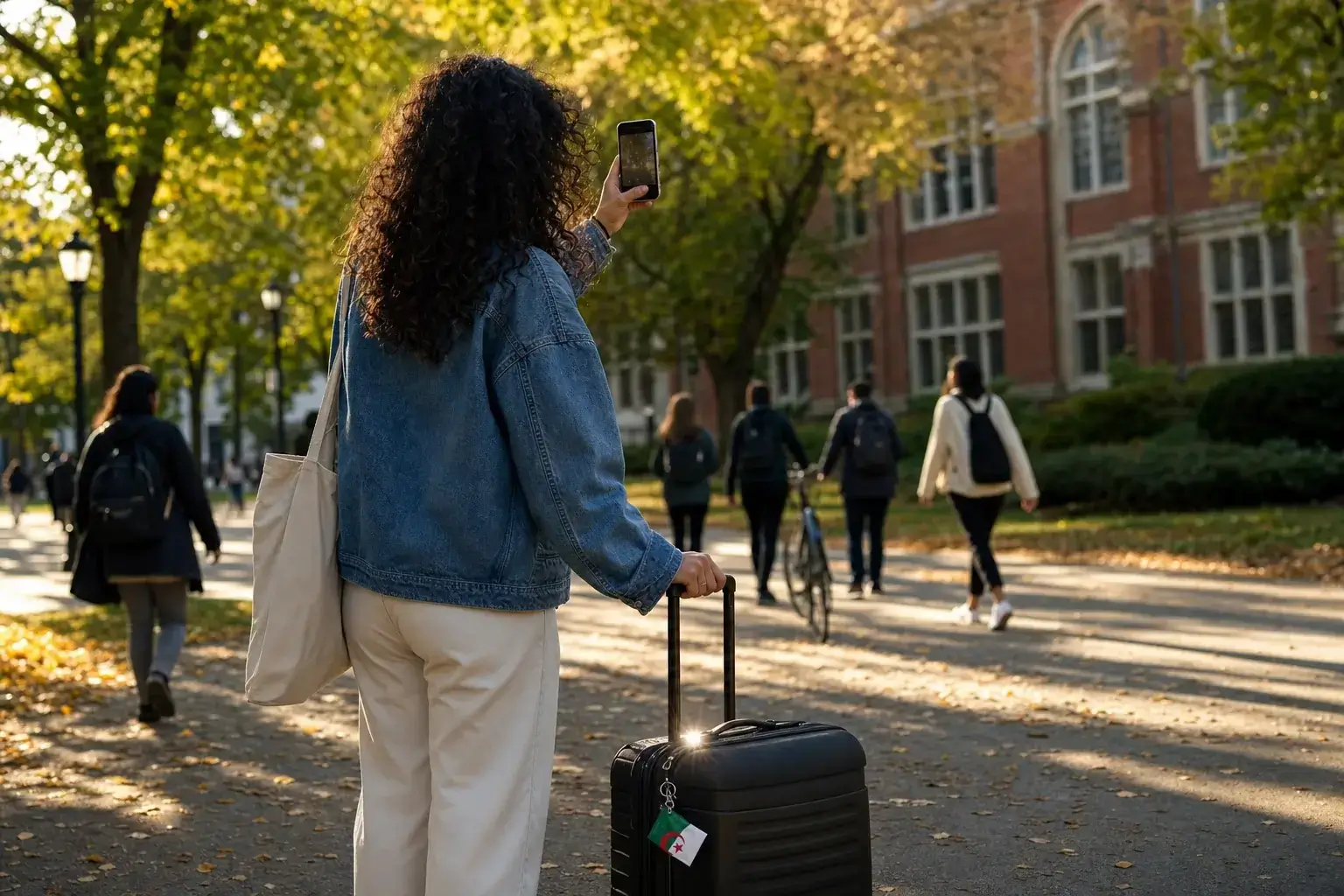
From Algiers to the First Semester
A composite story of the journey from study abroad to a first week on campus, based on the real files our team handles every year.

How to Apply for an Ausbildung from Algeria
Where you register, how you apply to a company, the documents, the German embassy visa file and appointment in Algiers, step by step with official sources.

Canada Immigration from Algeria: 4 Routes (2026)
Express Entry, PNPs, study permits, and family sponsorship compared for Algerians: real timelines, government fees, and where French gives you an edge.
Want the next one in your inbox?
One email when we publish something worth reading. Visa changes, deadlines, honest advice. Nothing else.